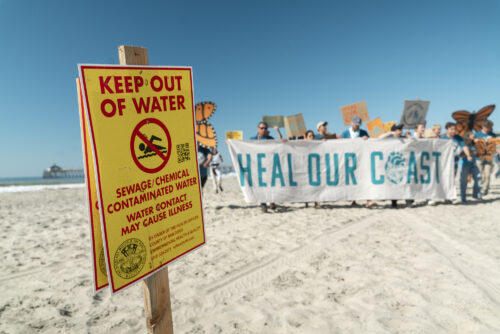
As Resource Media joins the philanthropic and nonprofit field at the Communications Network 2026 San Diego convening, one thing remains heavy on our minds, hearts, and lungs: the Tijuana River, one of the worst public health crises in North America.
Decades of neglect in both the U.S. and Mexico have polluted the river, air and coastline with industrial waste, untreated sewage, sediment, trash, and harmful toxins like hydrogen sulfide. Yet, with the support of the Prebys Foundation, Resource Media has learned some valuable lessons that kept our hands steady while leading bilingual strategic PR and supporting spokespeople with the Tijuana River Coalition over the past two years.
We offer four key learnings for communications to other funders and organizations facing times of turmoil and social crises like this one.
If you are in philanthropy or with an NGO working on health equity, environmental, water, youth leadership, or related causes, we invite you to meet up with Resource Media’s California-based senior staffers Refugio Mata and Rachele Hayward while we are in town for #ComNet26. Please send us a note! [email protected] / [email protected]
1) Critical community voices can become allies and spokespeople
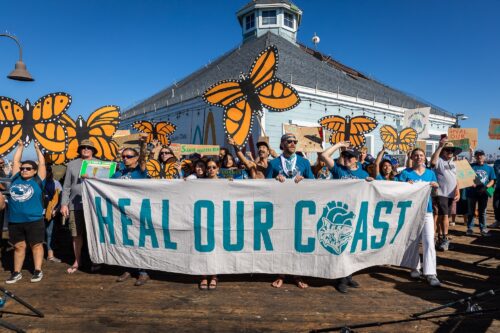
With coalition organizing and inclusive media approaches, critical voices from the community can transform from being framed as opposition into allies. Over the years, we’ve seen community gardeners, youth, small business owners, and other constituencies move from disgruntled and frustrated voices into powerful agents of change. Community leaders know what solutions will work best and are critical to bring to and keep at the table as the Coalition navigates thorny issues, balances equity considerations, and responds to realtime spikes in health-harming air pollution from storms, sewage spills, broken pipes, and other emergencies. Inspired by Trust Based Philanthropy and other movements, we work hard to center the voices of those growing up or living, working, and raising families in communities like “the IB,” Nestor, San Ysidro, “South County” or “the TRV.” Take Carmen Penaloza Valdez – a college student, intern, and transfronteriza who was raised in both San Diego and Tijuana – who thanked us for giving her the opportunity to provide this quote at the top of a press release that was sent to thousands of news outlets:
“This is an inhumane public health crisis that harms thousands beyond ‘borders,’ and it is a politicized issue that is now in the hands of both political powers to act now.”
2) Connect with the champs
Resource Media has also seen the importance of connecting grassroots advocates to public policy champions like San Diego County Supervisors Paloma Aguirre and Terra Lawson-Remer, who have risen through elected offices to champion this issue and be the voice for the community that has for so long been silenced. By keeping a pulse on the impactful public policies and the funding sources that leaders are putting forth to address the Tijuana River crisis, we’ve been able to use media relations and make high-profile news where Coalition members provide backing and vocal support.
3) Keep consistent day-to-day to be nimble when curveballs come
Consistent and sustained funding has enabled communications best practices like daily news monitoring and frequent contacts with reporters and spokespeople across the region. This baseline, in turn, allowed us to be nimble when curveballs were thrown at the Tijuana River Coalition. For example, we avoided our equitable “public health crisis” narrative of the Tijuana River from being flattened into a divisive frame of “a Mexican sewage problem” when the newly-inaugurated second Trump Presidential Administration arrived in San Diego on Earth Day, April 2025. While U.S. EPA Administrator Lee Zeldin held a press conference bypassing Supervisor Aguirre and members of the Coalition and including only Republican men with a backdrop of military helicopters, the Coalition’s English and Spanish press statements were ultimately picked up and cited in several major media outlets. This on-the-ball approach also paid off in responding to later visits to San Diego by Administration officials and to the new U.S.-Mexico Memorandum of Understanding on the Tijuana River.
4) Sustain shared values, hope and collective action
While today’s challenges are big and unprecedented, our movements for social change have so many deeper and more powerful currents, such as community power, history of resilience, and deep roots. In order to avoid burnout, backlash, and narrative hijacks, and to motivate audiences for long haul change, we must always tap into powerful values. A social norm theory called the Inzovu Curve developed by UX For Good and the Kigali Genocide Memorial in Rwanda, reminds us that:
“There’s also another kind of hope that instead is triggered by acceptance, rebirth, reconciliation and reconstruction. It’s hope for the future. Moments crafted for hope reverse the pain and reflection depth and are meant to shift the emotional response and to inspire action.”
As we celebrate the progress we’re making together on the Tijuana River crisis and advocate for follow-through on solutions, hope and action remain our North Star. Please join the Tijuana River Coalition as we unite our voices for a healthy future for communities in California and Mexico.